In early December, I posted about making strained yogurt, in which I discussed having some whey leftover. I wanted to make ricotta, but 2.5 cups of whey would yield less than 2 oz of ricotta. I also found 24 oz of ricotta shortly after. A reader suggested I use the whey to brew blaand, a sort of old-fashioned milk wine introduced to Scotland by Vikings. Just enough for a couple of glasses. I strained a second tub of yogurt to get enough whey to make a full pint, two and a half cups total.
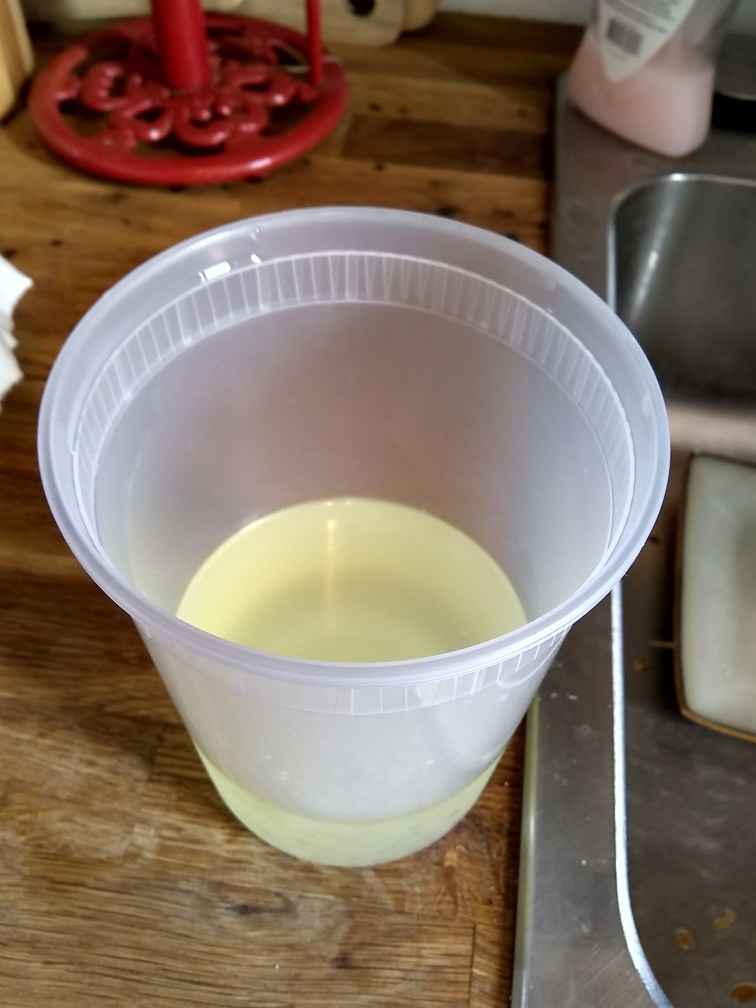
I found a recipe by James, of the blog “Happy Homestead”, who used sugar but noted that the traditional recipe would have used honey. So I used a little over a third of a cup of honey, a mix of plain raw organic honey and Manuka honey. I scaled down the amount of yeast (champagne yeast leftover from mead-brewing) used to the proportions of my recipe and also scaled down my brewing vessel, opting to cut a hole in the lid of a plastic soup container for the stopper rather than leave my one gallon carboy* filled mostly with air. This is pretty easy to do because the plastic will bend around the stopper, so the hole doesn’t have to be perfectly round to get a good seal. If you haven’t noticed, I’m completely fine with putting just about anything in a plastic container.
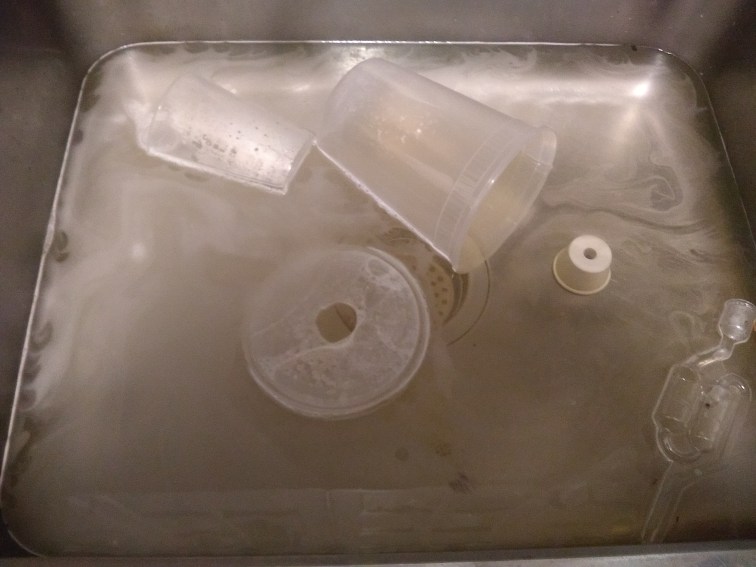
Everything was first sanitized in an iodine solution.
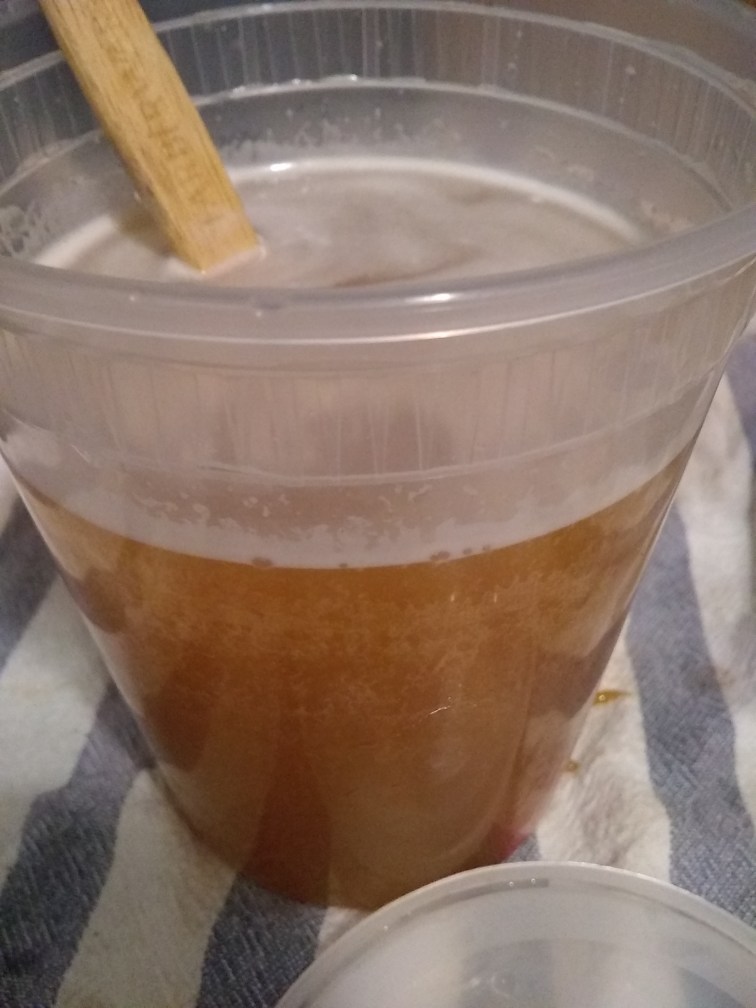
After warming up the whey and mixing in the honey, the whey became a deep amber in color. I waited for it to cool again before adding the yeast.
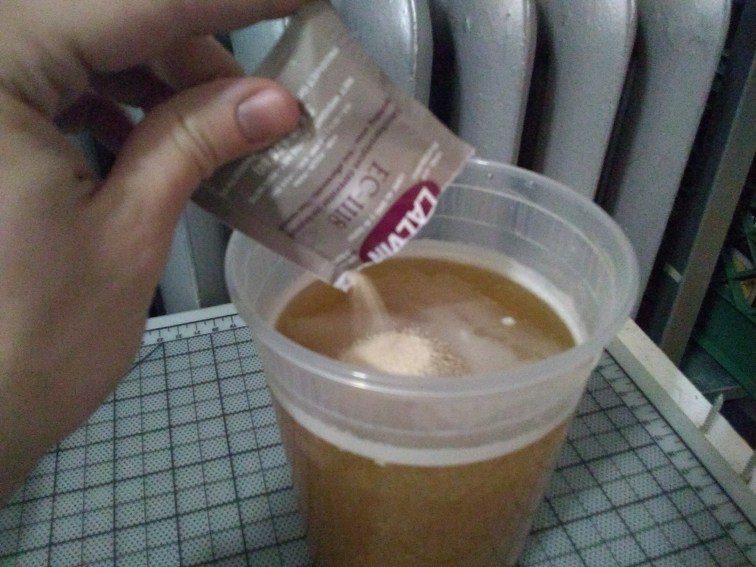
I had a packet of yeast already opened, but that was at least a year ago and must have gone bad by now, so I opened a fresh packet just to use roughly an eighth of it. The instructions said to allow it to ferment for three months, something I thought was odd since I’d never heard of fermentation lasting that long. Aging, sure, but leaving the airlock and sediment in for that long seemed wrong. But I’d never made blaand before, so I followed the recipe.

After two months, I opened the lid to re-sanitize the airlock, which was starting to grow mold inside. The blaand itself was fine, and smelled sweet and very much like the mead I had brewed in the past.

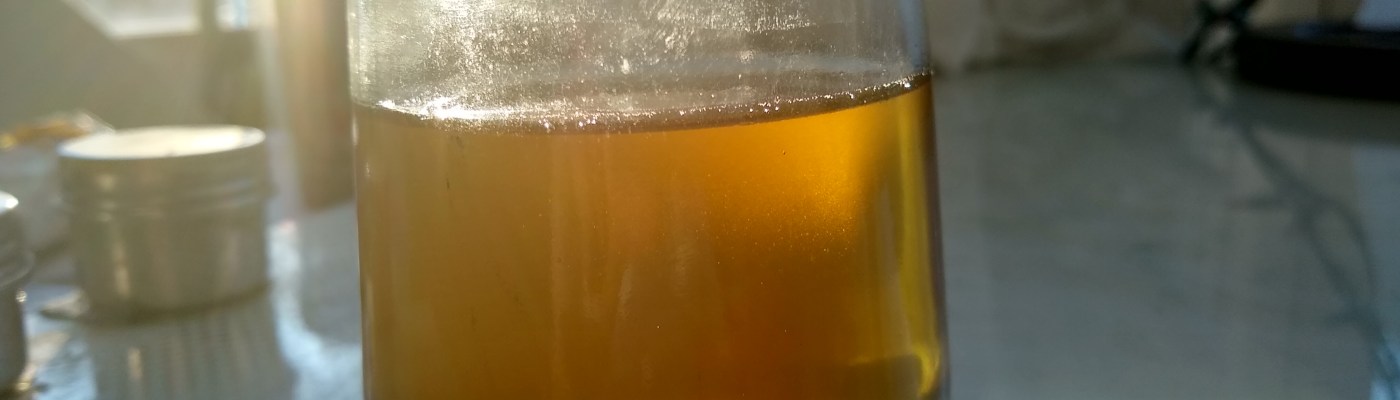
At the end of the third month, I moved the finished blaand into a clean container, removing it from the sediment that had settled at the bottom. The wine smelled strongly of sweet dried figs. Upon first tasting it the primary flavor was shockingly sour, with the fig and honey as a pleasant aftertaste. But it was not the sourness of spoiled milk, but something more like a sharp lemon, and as I drank more the sourness began to subside. I had expected it to taste like mead, because it had smelled so much like the mead I had brewed in the past, so the sourness was exaggerated in my mind. It was sort of like a cider, and would probably do well hot and spiced.
* The carboy came with a beer brewing kit I got for fifteen dollars with my employee discount at an office supply store. I’ve gradually replaced almost everything else that came with the kit, because it’s cheap shit, but the jug is pretty solid.
 Good Dumpster Cooking